
By mid-2026, the human-machine interface has reached a state of absolute, seamless perfection. We scroll through high-refresh-rate holographic displays, interact with glass that offers no resistance, and gesture through spaces where physical friction has been systematically engineered out of existence. While this frictionless existence represents the pinnacle of technological convenience, it has left the human nervous system in a state of profound sensory bankruptcy. We are living through what neuroscientists and spatial designers call the Great Tactile Deficit.
When every surface we touch is polished, flat, and cold, our sensory receptors go dormant. The skin, our largest organ of perception, becomes starved of the evolutionary feedback it was designed to process: texture, temperature variation, resistance, and gravity. In response to this sensory silence, the design world of 2026 is staging a powerful, instinctual rebellion. We are seeing a massive shift towards materials that demand attention, surfaces that push back, and textures that possess "grit."
At Borealforest, we believe that objects are not merely passive decoration; they are vital nodes of interaction. Our ceramics do not seek to blend seamlessly into the background. Instead, they act as intentional disruptions—physical speed bumps for the hands and eyes. The introduction of coarse, unglazed, clay-finish ceramics is the ultimate manifestation of this movement. By bringing raw mineral surfaces into our living spaces, we are not just decorating; we are introducing a necessary sensory friction that awakens our dormant tactile intelligence.
The Solfatara Phenomenon—Aestheticizing Natural Erosion
At the forefront of this tactile revival is the Solfatara Texture. Named after the active volcanic crater in the Phlegraean Fields of Italy, Solfatara represents an aesthetic of controlled geological violence and natural erosion. It is characterized by rough, cratered, sulfurous-toned, and micro-cracked surfaces that mirror the cooling crust of the earth. These textures are not painted or printed; they are born from the interaction of mineral-heavy clay bodies and unstable atmospheric kiln conditions at 1300°C.
In the luxury interior design landscape of 2026, Solfatara textures have replaced the sterile, high-gloss finishes of the previous decade. Why? Because a cracked, volcanically eroded surface cannot be simulated by an industrial machine. Each Solfatara piece carries a unique topological map—depressions where the mineral deposits have melted and bubbled, rough ridges where the sand-tempered clay has resisted the artisan’s fingers, and varying mineral gradients that transition from deep charcoal to sulfureous ochre.
This aesthetic is the core of Warm Minimalism. It recognizes that a minimalist space does not need to feel sterile. By keeping the architectural lines of a room clean and expansive, a single Solfatara-textured object—such as a large Borealforest floor vase—becomes the focal point of the entire room. The simplicity of the surrounding space amplifies the complexity of the object's texture. It is a visual and physical meditation on the power of decay, change, and permanence. It is a physical testimony that, unlike the fleeting nature of digital content, some things are forged to withstand the erosion of time.
Unglazed Stoneware as a Sensory Interface and Digital Antidote
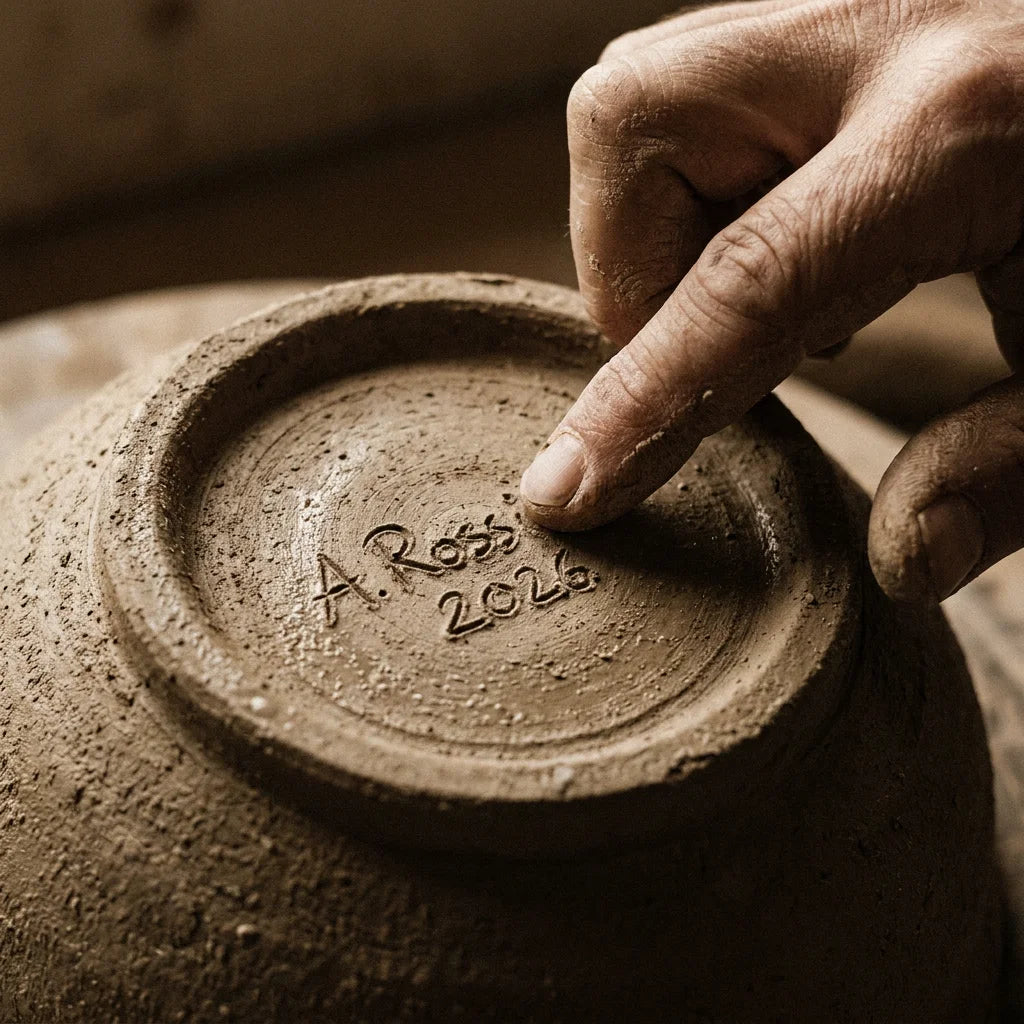
To understand why unglazed clay-finish ceramics are redefining luxury, we must look at how these materials interact with our biology. When clay is left unglazed, its micro-porosity remains open. When you pick up an unglazed Borealforest cup or run your palm along the surface of a Solfatara vessel, you are touching the raw, fired earth itself.
This unglazed surface behaves as an active Sensory Interface:
- Thermal Responsiveness: Unlike synthetic plastics or highly insulated materials, raw mineral clay has a high thermal capacity. It absorbs the ambient temperature of the room and, more importantly, the warmth of your hands. As you hold a Borealforest piece, it slowly warms, establishing a somatic feedback loop that grounds your nervous system.
- The Micro-Acoustics of Touch: The act of touching a coarse clay surface produces a distinct, low-frequency sound—a dry, rustling whisper that acts as an auditory anchor. This tactile acoustic feedback is the physical equivalent of white noise, calming the over-stimulated brain of the WFH professional.
- Moisture and Breathability: Unglazed clay retains a minute amount of atmospheric humidity. It breathes. When you touch it, there is a subtle exchange of moisture that feels distinctly alive, unlike the dead, static plastic surfaces that dominate our workspaces.
This physical experience is what we define as the Digital Antidote. As we detailed in our yesterday’s exploration of the New Artisanal Renaissance, human beings crave physical anchors to balance the weightlessness of virtual existence. A coarse-clay vessel is a physical backup of the earth’s raw power, offering a grounding ritual in every interaction.
The Neuro-Gastronomy of Raw Minerals
The sensory impact of raw mineral finishes extends far beyond visual aesthetics; it fundamentally alters our physiological experience of the home. This is the realm of Neuro-Gastronomy—the study of how our brain integrates multisensory signals to construct our perception of flavor, comfort, and safety.
When we hold a hand-built, coarse stoneware bowl, our brain registers several key inputs:
- Weight and Density: Raw clay mixed with minerals like iron, manganese, and silica is dense and heavy. As we established in our foundational whitepaper on Neuro-Gastronomy 2026, the weight of an object is directly translated by our brain into a signal of value, safety, and nutrition. Eating from a heavy, rough-textured bowl makes the food taste richer and more satisfying because the brain is primed for an experience of abundance.
- Textural Contrast: The juxtaposition of smooth, warm liquid or food against the rough, unglazed rim of a clay cup or bowl creates a powerful sensory friction. This contrast stimulates the trigeminal nerve, heightening our awareness and turning a simple meal into an immersive sensory ritual.
In high-stress modern environments, these neuro-gastronomic cues are vital tools for cortisol reduction. By replacing thin, glass, or bone-china tableware with Borealforest's heavy, raw-mineral stoneware, you are sending a direct signal of stability to your limbic system. You are practicing Material Therapy.
Integrating Solfatara Textures into the Curated Gallery Home
How do we design with raw minerals without making a space feel primitive or cluttered? The answer lies in the curation of contrasts—the hallmark of the modern Curated Gallery aesthetic.
- The Dialectic of Smooth and Rough: Place a heavily textured, unglazed Solfatara vase on a perfectly smooth, polished concrete or white marble kitchen island. The sleekness of the modern stone highlights the rugged, ancient qualities of the ceramic, creating a dynamic visual tension that feels museum-like and highly intentional.
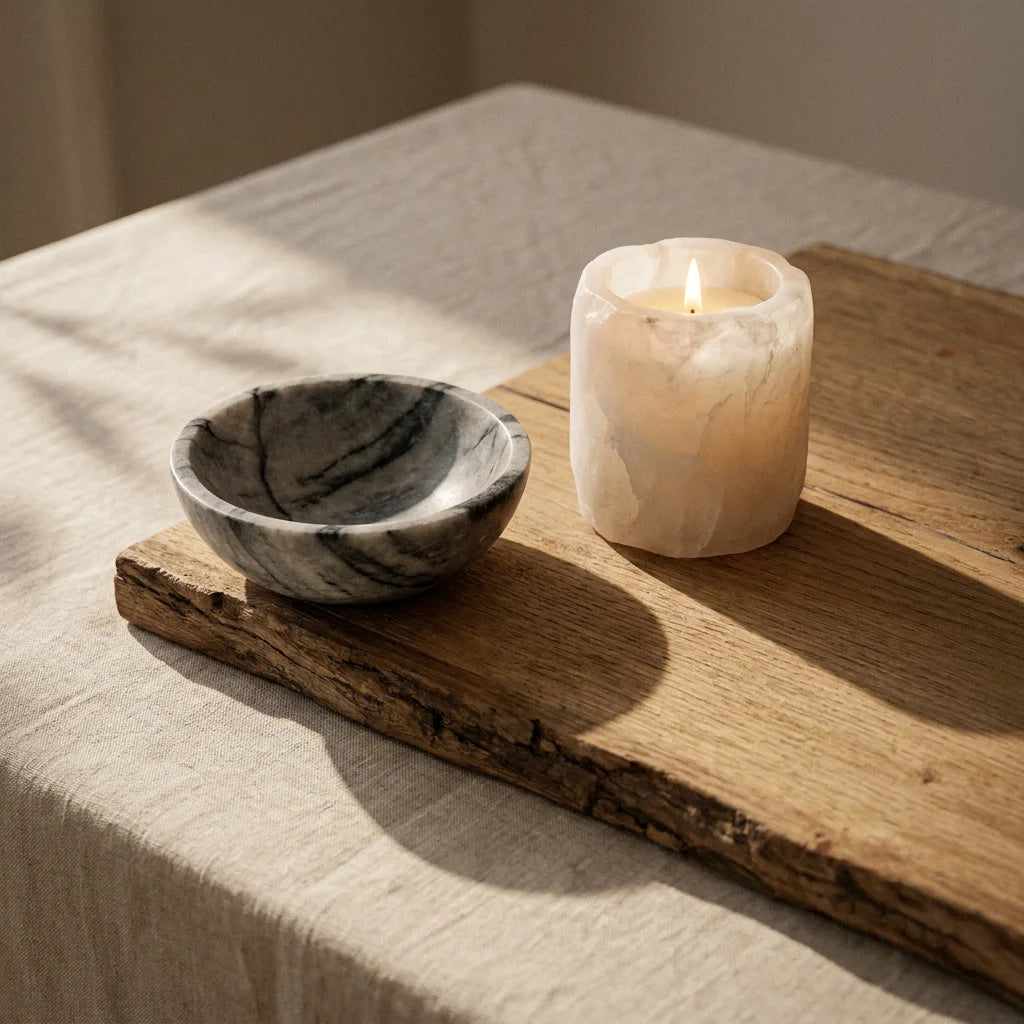
- Organic Layering on Warm Minimalism: Pair coarse clay vessels with organic, low-sheen fabrics like heavy Belgian linen, raw silk, or brushed wool. Avoid matching sets; instead, mix and match different mineral tones—combining the rich, charcoal-dark iron clays with warm, sandy, unglazed grog bodies to build a quiet, sophisticated gradient of earth tones.
- The Natural Light Play: Solfatara textures are light-catchers. Place these objects where they can interact with natural sunlight. As the sun moves throughout the day, the changing angles of light will cast deep shadows across the micro-craters and ridges of the ceramic, transforming the object into a living, breathing sundial that connects your indoor environment to the cosmic rhythms of the day.
Ultimately, designing with Solfatara textures is about investing in Permanent Value. These are not objects that will look dated when the next trend cycle arrives; they are timeless mineral expressions that will grow more beautiful as they absorb the oils of your hands and the dust of your home. They are the permanent artifacts of your sanctuary.
Ready to experience tactile grounding? We invite you to Explore the Studio Archive and Bring the Forest Home.