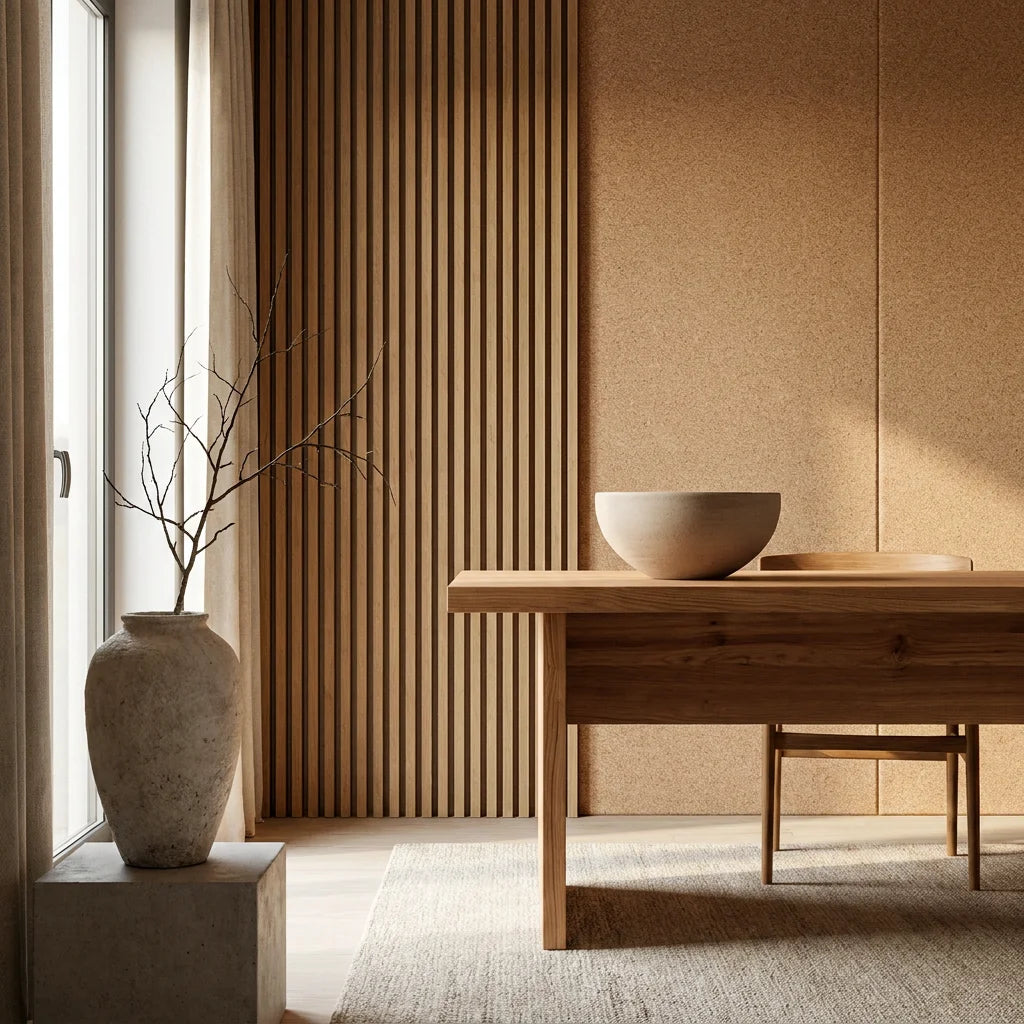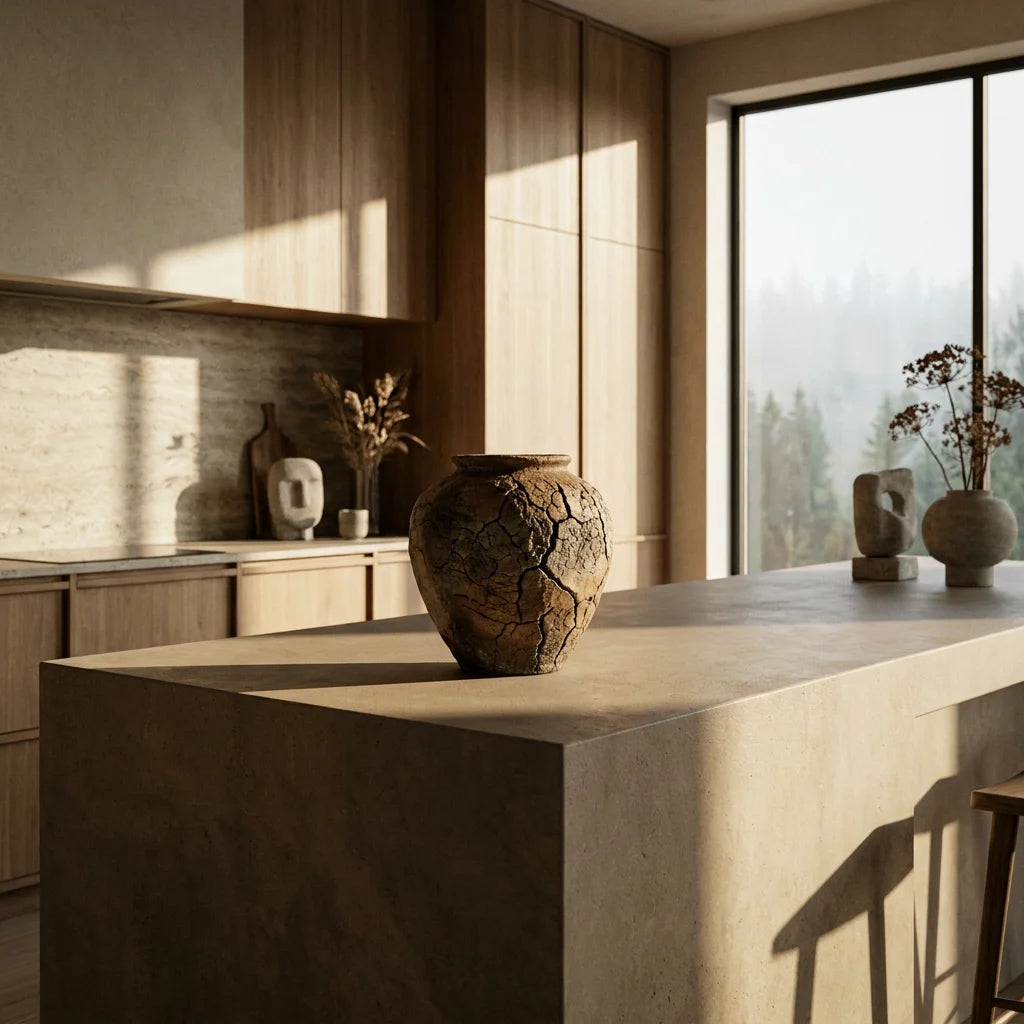

By mid-2026, the interior design landscape has completely shifted away from the polished, sterile surfaces of the early digital era. In our homes and on our tables, we are witnessing a quiet revolution that designers are calling the New Mineralism. This movement represents a profound hunger for materials that are raw, alive, and breathing—surfaces that retain their geological memory and offer physical resistance to our fingertips. Leading this movement is the renaissance of Living Stones, specifically soapstone and raw alabaster, as they redefine the modern dining and tabletop ritual.
For too long, the objects that populated our daily lives were engineered for frictionless perfection. We swiped across ultra-smooth glass, touched synthetic polymer plates, and sat at tables finished with high-gloss laminates. While these materials offered convenience and durability, they left our sensory nervous systems starved. In our previous exploration of the Solfatara Textures & Raw Minerals trend, we detailed the rise of unglazed clay as a crucial sensory interface. Today, we expand that focus to the stones themselves—the ancient minerals that ground us in a weightless world.
Section 1: The Philosophy of Living Stone
What makes a stone "living"? In the vocabulary of high-end architectural curation, a living stone is one that is porous, interactive, and responsive to its environment. Unlike granite or quartz, which are chemically sealed to resist any interaction, soapstone and alabaster are deeply receptive. They do not remain static; they absorb the oils of your hands, the warmth of the room, the condensation of a cold glass, and the wax of a slow-burning candle. They develop a rich, personal patina over time, becoming physical diaries of the rituals they host.
At Borealforest, our design philosophy, as outlined in our journal on The New Artisanal Renaissance, is to curate objects that have a soul. A soapstone bowl or an alabaster candle cup is not just a vessel; it is a geological artifact. Formed millions of years ago under intense tectonic pressure, these stones carry a literal gravity that anchors our high-speed, digital existence. When you place a soapstone platter on your dining table, you are introducing a physical baseline of geological time—a quiet reminder of permanence and endurance that calms our fight-or-flight responses.
Section 2: Soapstone—The Thermal Heart of the Table
Soapstone (steatite) has been prized by artisans for thousands of years, yet in 2026, it is experiencing a major luxury revival. It is a stone unlike any other. Composed largely of talc, soapstone has a unique, silky-soft texture—often described as feeling "soapy" or velvety to the touch. This soft tactile interface is incredibly satisfying to hold, providing a soothing somatic sensation that signals safety to the limbic system.
But the true magic of soapstone lies in its extraordinary thermal properties. Soapstone possesses incredibly high density and thermal conductivity. It can absorb intense heat or cold and radiate it slowly over hours. In the context of a dining ritual, this makes soapstone the ultimate tabletop medium:
- Warmth Preservation: When a soapstone serving plate is gently warmed in an oven before dinner, it will keep roasted root vegetables or freshly baked sourdough bread warm throughout the entire meal. The stone acts as a thermal heart, radiating a gentle, consistent heat that enhances the comfort of the table.
- Cold Retention: Conversely, a soapstone board chilled in the freezer before serving will keep cheeses, fruits, or raw oysters crisp and fresh for hours, even during warm summer evenings on the patio.
This thermal exchange creates an interactive, responsive dining experience. As you touch the stone, it responds with its stored energy, establishing a biological dialogue that makes us feel deeply connected to the act of nourishment.
Section 3: Raw Alabaster—Sculpting Natural Light
If soapstone is the thermal anchor of the table, raw alabaster is its luminous soul. Alabaster is a fine-grained, massive variety of gypsum that has been used for centuries to carve luxury objects and sacred vessels. Its most defining characteristic is its translucent quality. When carved thin, alabaster allows light to pass through its crystalline structure, filtering and softening it into a warm, ethereal glow.
In 2026, raw alabaster candle holders and tabletop accents are the cornerstone of the Sensory Sanctuary aesthetic. Unlike harsh electric lighting, which keeps our cortisol levels elevated, the light filtered through an alabaster vessel has a natural, flickering frequency that mimics the warm glow of a campfire. Placing a raw alabaster candle holder on a dining table immediately softens the atmosphere, shifting our brain waves from active beta states to relaxed alpha states.
Furthermore, unpolished alabaster possesses a delicate, powdery matte texture that is highly tactile. It has "grit" and variation, with natural veins of iron oxide and clay running through it like delicate golden-brown threads. Each piece is a unique light sculpture, capturing and diffusing natural daylight by afternoon, and glowing like a miniature sun by night. It connects our indoor environments to the cosmic transit of light throughout the day, acting as a visual clock that invites mindfulness.
Section 4: The Neuro-Gastronomy of Tabletop Minerals
The rise of living stones is deeply rooted in the science of Neuro-Gastronomy—the study of how our brain integrates multisensory signals to construct our experience of taste, comfort, and luxury. As we established in our foundational research on Neuro-Gastronomy 2026, our sensory systems do not work in isolation. The weight, texture, temperature, and acoustics of our tableware directly dictate how our brain perceives the food and drink we consume.
When we serve food on heavy, dense soapstone, or light our tables with raw alabaster, we are triggering several powerful neuro-gastronomic cues:
- The Gravity Signal: High-density materials like soapstone have substantial weight. When we lift a heavy stone platter or bowl, our brain registers this weight as a proxy for nutritional density, safety, and high value. Studies show that eating from heavier tableware increases our appreciation of food, making flavors taste more intense and satisfying because the brain is primed for an experience of abundance.
- The Silence of Mineral Acoustic: Clattering modern tableware can create a noisy, stressful dining environment. Stone and raw unglazed clay absorb sound. The gentle, muted click of a wooden spoon against a soapstone bowl or the quiet slide of an alabaster dish creates a hushed, sacred acoustic space. This reduction in ambient noise lowers our heart rate, allowing the digestive system to operate in a parasympathetic "rest-and-digest" state.
- Textural Grounding: The contrast between the smooth, velvety touch of soapstone and the raw, mineral edge of alabaster stimulates our skin's receptors, pulling our attention away from virtual screens and anchoring us fully in the present moment of dining.
Section 5: Curating the Living Stone Dining Experience
Integrating these living stones into your home does not require major renovations; it is about creating a curated collection of tactile contrasts. Here is how to style soapstone and alabaster for a modern, warm minimalist table:
1. The Contrast of Smooth and Rough: Place a heavily veined, raw-edge soapstone platter on a smooth, lightly brushed oak or ash wood table. The contrast between the dark, velvety stone and the warm, golden wood grain creates a beautiful organic tension. Complete the setting with a single, unglazed ceramic vase from our Modern Primitive Collection, creating a museum-grade gallery aesthetic.
2. Layering Warm and Cool Neutrals: Soapstone typically ranges from deep charcoal to soft, slate grey, while raw alabaster is milky white, cream, or warm honey. Layer these tones on a natural, un-ironed flax linen tablecloth. The neutral palette keeps the visual noise low, while the varied textures—soft stone, translucent light, rough clay, and heavy linen—create a rich sensory depth that feels incredibly warm and inviting.
3. The Fire and Ice Ritual: Use soapstone as your thermal anchor for hot foods, and raw alabaster as your light anchor. As the candle warm-up the alabaster vessel, its milky surface glows from within, while your soapstone boards radiate warm, earthy aromas of freshly baked bread. This interactive play of temperature and light turns a simple weekday dinner into a grounding, transformative ritual.
Conclusion: Invest in the Antidote
The objects we choose to surround ourselves with are an extension of our values. In 2026, choosing raw, unpolished, hand-carved stone over mass-produced plastics or glass is a radical act of self-care. It is a decision to prioritize material truth, human artistry, and sensory wellness in our daily lives.
We invite you to explore the Studio Archive of Borealforest and discover the grounding power of our hand-built stoneware and raw mineral accessories. Bring the forest home. Bring the living stone into your sanctuary.