
By the summer of 2026, the global design community has reached a consensus: the era of sharp, aggressive geometric angles and sterile, hyper-machined lines is over. In our living rooms, bedrooms, and workspace niches, we are witnessing a sweeping movement toward what designers call Organic Modernism—often summarized as Modern Zen. This design ethos represents the evolution of warm minimalism, where the strict clean-lined architecture of the home is deliberately softened by the introduction of natural, fluid silhouettes, curved unglazed clay, and sculpted organic textures. In an era dominated by flat, frictionless screens, curved tactile forms have become the ultimate symbol of cozy luxury.
This biological shift is not purely aesthetic; it is deeply rooted in human survival mechanisms. As we explored in our previous explorations of the Sensorial Light crisis and the importance of Silent Sanctuaries, our nervous systems are highly sensitive to the spatial geometries of our indoor environments. A space filled with sharp corners, reflective metals, and straight glass lines triggers a low-level, subconscious "alertness" in our brains. Curved, organic forms, however, trigger the exact opposite—a feeling of protection, biological ease, and profound rest.
Section 1: The Geometry of Threat vs. The Curve of Sanctuary
In evolutionary psychology, the shapes we surround ourselves with carry a powerful emotional charge. Sharp, jagged, and hard-edged structures mimic the threats found in primeval nature—thorns, rocks, and the teeth of predators. When our eyes process these sharp intersections in an interior space, our amygdala registers them as potential hazards, keeping our bodies in a state of high cognitive load. This is the structural flaw of industrial minimalism: while it attempts to reduce visual clutter, its sharp, hard-lined execution keeps our stress hormones elevated.
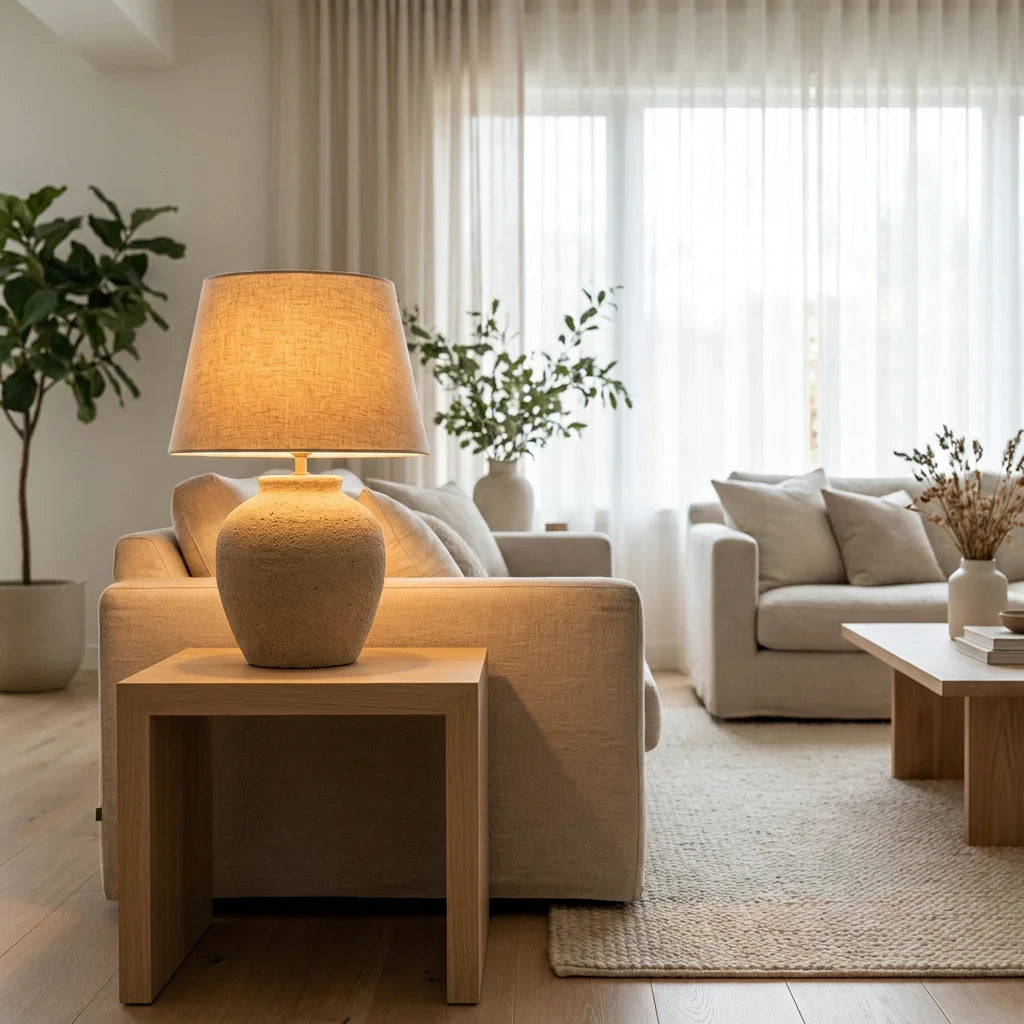
In 2026, the interior design landscape is staging an intentional, biological intervention. We are entering the age of the Great Curving. Modern Zen does not mean returning to the cluttered, ornate decoration of the past; rather, it represents the pairing of an expansive, minimalist room layout with a few, highly curated, sculptural curved elements. A curved plaster alcove, a rounded oak table, or a hand-coiled ceramic vase acts as a visual resting point. By introducing fluid, sweeping lines, we break up the harsh geometry of the room, creating an environment that feels welcoming, organic, and biologically aligned.
Section 2: Curved Clay—The Fluidity of Geological Earth
At the center of this curved movement is the renaissance of sculptural unglazed clay. Clay is a living, geological material. For centuries, it was spun on high-speed wheels to produce perfectly symmetrical, uniform cylinders. But in the Studio Archive of Borealforest, our artisans are returning to the ancient, slow methods of hand-building and coiling. These techniques allow us to break free from the symmetry of the machine and explore the organic fluidity of the earth.
A Borealforest curved ceramic piece—such as our sculptural, unglazed, wabi-sabi vase—does not seek industrial perfection. It embraces the natural asymmetry of organic growth. Each curve is built slowly, coil by coil, allowing the weight of the clay and the moisture in the air to influence its final silhouette. When you touch these surfaces, you are not touching a cold, dead, molded plastic or machined metal object. You are interacting with a physical, hand-signed, and geological record of a slow human interaction, as detailed in our whitepaper on The New Artisanal Renaissance.
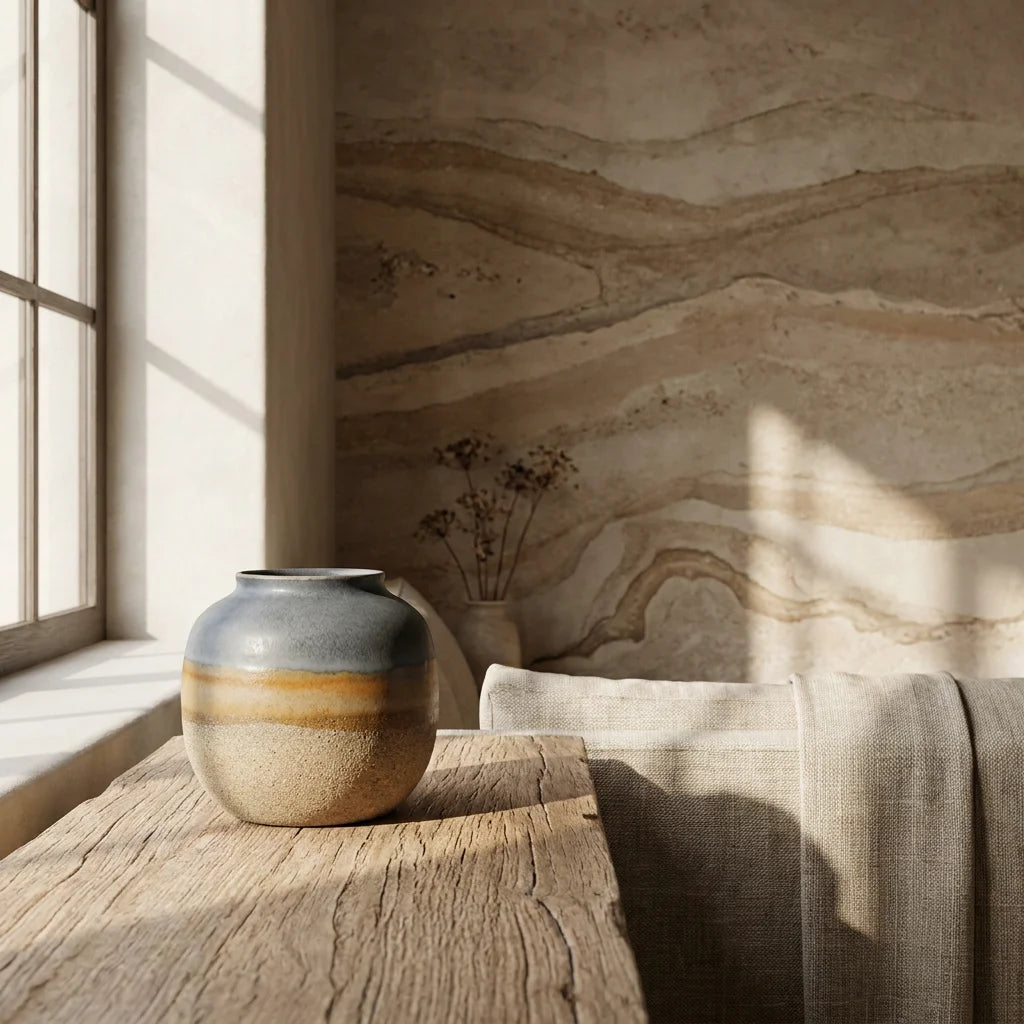
Unglazed, sand-tempered clay possesses a unique topological richness. Its open, micro-porous surface absorbs light, creating soft, painterly gradients of shadow that wrap around its curved form. As the natural sunlight shifts throughout the day, the shadows on a curved unglazed vase deepen and shift, transforming the object into a slow-moving, living sculpture that connects your home to the organic rhythms of the cosmic transit.
Section 3: Sculpted Textures—Reclaiming the Sensory Interface
To understand the luxury of Modern Zen, we must also examine the importance of **sculpted, unpolished textures**. In an era dominated by smooth glass screens, our touch has been systematically engineered out of our lives. We swipe across flat, friction-free surfaces that provide zero biological feedback. This has led to what spatial architects call "sensory deprivation."
Our hands are our primary tools of perception. They craved materials that have "grit," resistance, and variety. By introducing sculpted, rough-hewn clay-finish table accessories—such as our hand-signed, unglazed, sculpted-handle ceramic mugs—we are providing our skin's tactile receptors with the necessary stimulation to re-calibrate. When you hold a Borealforest mug, your fingers wrap around a sculpted, textured handle that retains the direct, physical imprint of the artisan’s fingers. This "frictional interface" stimulates our sense of touch, anchoring our consciousness fully in the present moment. This is the essence of Material Therapy.
When this sculpted clay is paired with a solid, rough-grained cedar wood coffee table and a crumpled, natural flax linen napkin, we are creating a rich, organic tactile gradient. The raw cedar grain, the soft slub of linen, and the grit of sand-tempered clay work in harmony to soothe our over-stimulated minds. It is a slow, grounding ritual of touch that reduces anxiety and promotes a deep sense of safety.
Section 4: The Neuro-Gastronomy of Sculptural Form
The sensory impact of curved and sculpted shapes goes far beyond spatial design; it directly influences our physiological and neuro-gastronomic responses. As we established in our foundational research on Neuro-Gastronomy 2026, the shape, density, and weight of our tableware alter how our brain processes taste and nutrition.
Neuroscientific studies show that humans have a natural biological preference for curved objects. When we look at or hold a curved, organic-shaped vessel, our brain’s reward centers are activated, releasing dopamine and promoting relaxation. This is because curved shapes mimic the organic, life-supporting structures of nature—water droplets, river stones, fruits, and the human body itself.
When we dine or enjoy a quiet tea ritual using curved, heavy stoneware, our brain receives several grounding signals:
- The Flow Signal: Curved tableware lacks the sharp, dividing angles of standard industrial plates. This lack of sharp boundaries allows our eyes to flow effortlessly over the setting, lowering cognitive processing load and soothing the autonomic nervous system.
- The Weight of Value: Heavier, dense stone or sand-tempered clay tableware is associated by our brain with nutritional abundance, safety, and permanency. Eating from a hand-built, curved bowl makes the meal feel richer, encouraging us to slow down, savor the textures, and digest in a calm, parasympathetic state.
- Tactile Mindfulness: The contrast between the dry, coarse unglazed rim of a Borealforest cup and the warm, smooth liquid within creates a powerful sensory friction. This triggers the trigeminal nerve, heightening our sensory awareness and turning a simple coffee break into a restorative, mindful ritual.
Section 5: Curating the Modern Zen Home
Integrating Organic Modernism into your space is about creating a curated composition of contrasts—the hallmark of the modern **Curated Gallery** aesthetic. Here is how to style your space for optimal visual and physical peace:
1. The Contrast of Smooth and Sculpted: Place a heavily textured, unglazed Borealforest curved vase on a perfectly smooth, polished concrete console or white marble mantle. The sleekness of the modern architectural stone highlights the rugged, ancient qualities of the ceramic, creating a dynamic visual tension that feels museum-like and highly intentional.
2. Organic Layering of Earth Tones: Layer different neutral tones and materials on a low-sheen, natural wood surface. Combine rich, charcoal-dark iron clays with warm, sandy, unglazed grog bodies to build a quiet, sophisticated gradient of earth tones. Complete the setting with heavy, un-ironed Belgian linen or a thick wool throw to add rich, cozy depth to the space.
3. The Light and Shadow Play: Place your curved, sculptural ceramics where they can interact with natural side light. As the sun moves throughout the day, the changing angles of light will cast soft, elegant, and rounded shadows across the micro-craters of the ceramic, transforming the object into a living, breathing sundial that connects your indoor environment to the cosmic transit of light.
Conclusion: Invest in Cozy Luxury
In 2026, the ultimate sign of high curation is not a space that is flashy or loud, but one that has been softened with intention. A home should be a physical, grounding container against the weightless frequency of the virtual world—a modern Zen sanctuary where we can recover our human resilience.
By surrounding ourselves with materials that are curved, raw, and tactile—organic wood, rough linens, and Borealforest curved, hand-signed ceramics—we are building an environment that respects our biology. We are investing in our long-term wellness. Explore our Studio Archive today, find your perfect curved anchor, and bring the forest’s quiet, cozy luxury home.