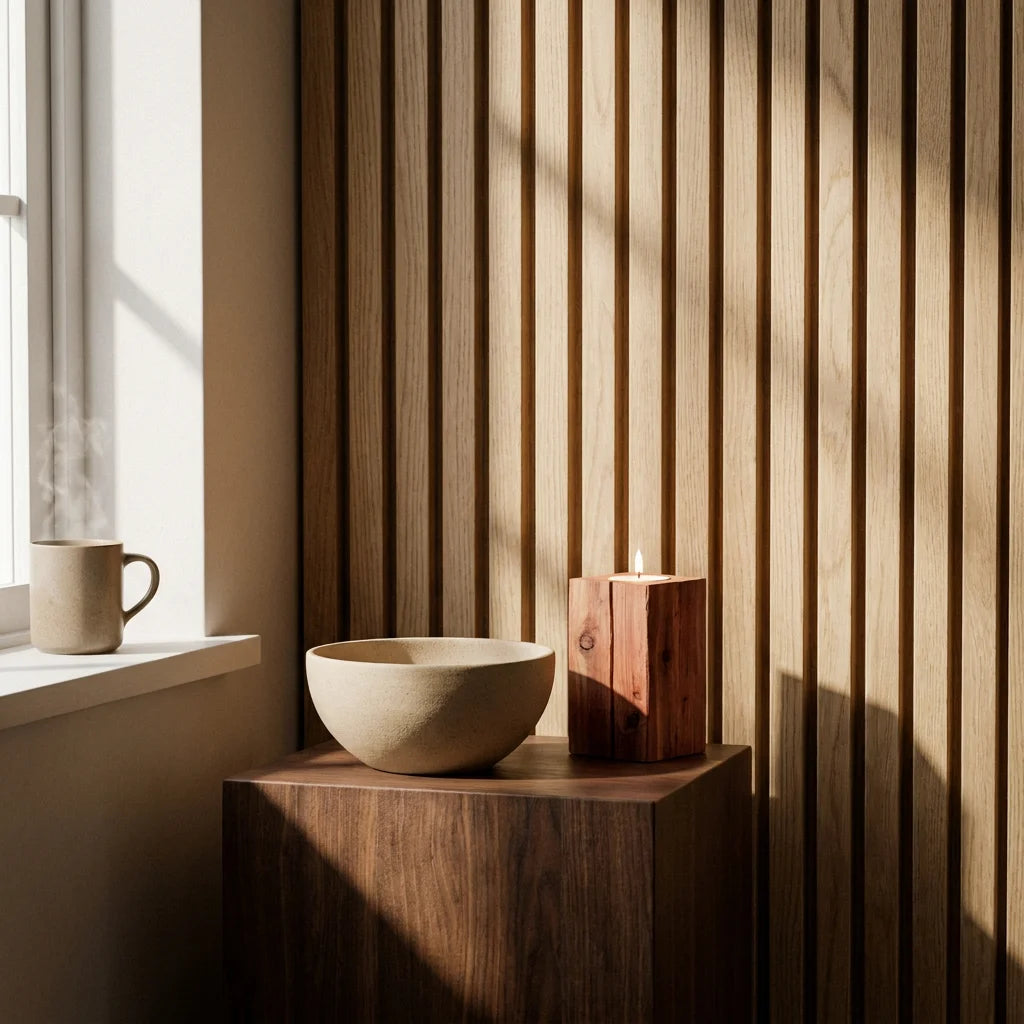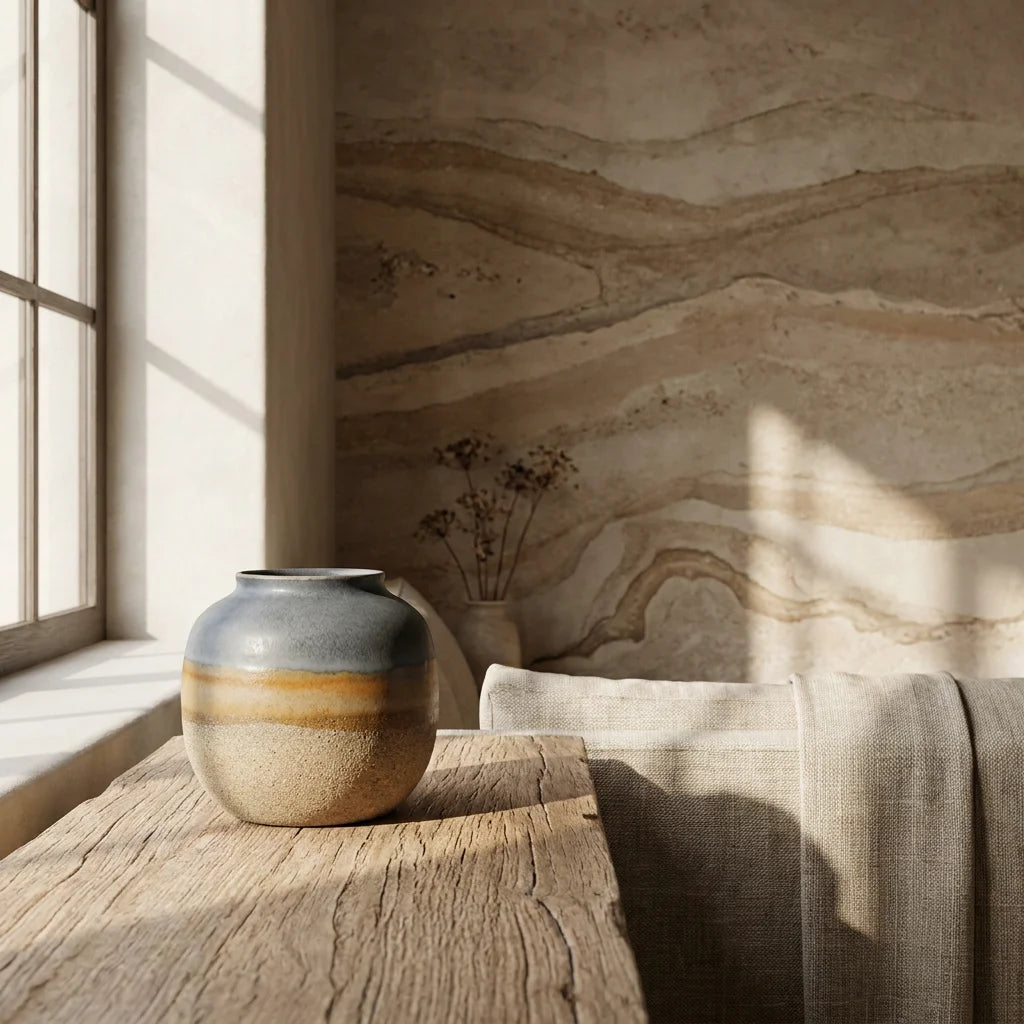

By the middle of 2026, the global wellness movement has transitioned from liquid tonics and wearable devices to the very earth we stand upon. We are witnessing a profound spatial healing movement that designers are calling Terra-Cotta Healing. This aesthetic is defined by the strategic introduction of raw, unglazed, iron-rich clays and warm, earthy peach-ochre tones into our personal sanctuaries. In an era saturated with virtual, cold, and weightless digital interactions, the rough, warm-spectrum, and porous touch of raw terra-cotta clay has become the ultimate biological shield against sensory fatigue and cognitive burnout.
This movement is not merely a return to rustic design; it is a tactical biological intervention. As we detailed in our previous brand whitepapers on the horizontal sedimentation of Geological Stratum and the rounded profiles of Modern Zen, the geometric and chemical properties of the materials we surround ourselves with directly dictate our neurological state. Today, we turn our focus to the oldest medium of human civilization—and how raw, iron-rich clay is being utilized to restore homeostasis in modern wellness spaces.
Section 1: The Bio-Chemistry of Clay—Why Raw Iron Matters
The term "terra-cotta" translates from Italian as "baked earth," yet the chemical reality of terra-cotta is deeply tied to its high iron oxide content. It is this abundant iron that gives raw clay its characteristic warm, low-saturation rust, peach, and ochre hues. In the human brain, these warm-spectrum, low-arousal colors have a direct, calming effect on our nervous systems.
When we look at raw terra-cotta, our visual cortex processes wavelengths that belong to the warm, low-frequency spectrum. Unlike the high-frequency, blue-shifted artificial lighting of our screens—which keeps our sympathetic nervous system in a constant state of hyper-arousal—raw clay tones signal safety and environmental stability. Furthermore, unglazed terra-cotta behaves as a diffuse, non-reflective optical absorber, as we explored in our whitepaper on Sensorial Light. It absorbs harsh glare, creating soft, painterly shadow gradients that wrap around the clay vessels, lowering cognitive processing load and reducing visual strain.
Section 2: Porosity as a Functional Sensory Interface
In high-tech interior spaces, the air we breathe is often over-filtered, static, and charged with positive ions from constant electronic usage. This causes respiratory strain and somatic tension. Unglazed, low-fired terra-cotta clay has an open, highly porous cellular structure that acts as a natural, breathing **Sensory Interface**:
- Atmospheric Humidification: Because raw terra-cotta is highly porous, it breathes. It absorbs ambient humidity during times of excess moisture and slowly releases it when the air is dry, acting as an organic, non-electric relative humidity stabilizer for WFH spaces and bedrooms.
- The Micro-Acoustics of Rest: Micro-porous materials are highly efficient sound absorbers, as we detailed in our foundational study on Silent Sanctuaries. When sound waves hit unglazed terra-cotta, they enter the microscopic channels of the clay, where they are converted into thermal energy through viscous friction. This absorbs ambient high-frequency echo, making WFH offices feel quiet, focused, and secure.
- Earthy Olfactory Aromatherapy: Unglazed clay possesses a delicate, earthy aroma when it comes into contact with moisture or heat—often referred to as *petrichor* or geosmin. This subtle, mineral-scented cue is deeply calming to our limbic system, triggering ancestral memories of fertile soil, rain, and safety, lowering cortisol levels instantly.
Section 3: Reclaiming the Frictional Touch
For the remote professional in 2026, the ultimate sensory deficit is the lack of physical friction. We swipe across flat, friction-free glass screens, tap on synthetic plastic keys, and sit at polished laminate desks. This frictionless existence has left our skin’s mechanoreceptors starved of the evolutionary feedback they were designed to process: texture, resistance, density, and temperature variation.
At Borealforest, our design philosophy is centered around the concept of Material Therapy—using raw geological textures to restore our connection to the physical world, as outlined in The New Artisanal Renaissance. Our raw clay vessels, unglazed cups, and planter trays are designed to provide physical speed bumps for your hands. When you pick up a low-fired Borealforest terra-cotta cup, your skin processes the dry, coarse, sand-grained grit of the clay. This sensory friction acts as a grounding anchor, pulling your consciousness out of the abstract, virtual screen and bringing you fully into the present moment of your ritual, as we established in our research on The Living Stone and Solfatara Textures.
Section 4: The Neuro-Aesthetics of Clay-Finish Spaces
The rise of terra-cotta wellness spaces is backed by the emerging science of **Neuro-Aesthetics**—the study of how environmental geometries and textures shape our biology. When we surround ourselves with raw, clay-finish elements, our brain registers several positive changes:
- Sympathetic Deactivation: The combination of warm, low-saturation clay hues and micro-porous acoustic dampening stimulates the vagus nerve. This triggers parasympathetic dominance, slowing heart rates and promoting deep, diaphragmatic breathing.
- Cognitive Restoration: Raw clay textures are naturally fractal, presenting organic, non-uniform mineral patterns. Neuroscientific studies show that processing fractal geometries requires less neural effort, allowing our brains to enter a relaxed, meditative "open monitoring" state that clears mental fatigue and sparks creativity.
- Cortisol Suppression: The grounding scent of mineral clay, combined with the tactile warmth of held stoneware, sends a direct signal of environmental safety to the amygdala, reducing cortisol levels and somatic tension.
Section 5: Curating Your Terra-Cotta Wellness Corner
Integrating the terra-cotta healing aesthetic into your modern home does not require major renovations; it is about creating a curated collection of tactile and visual contrasts:
1. The Contrast of Raw and Smooth: Place a rustic, unglazed terra-cotta clay planter containing a soft, green fern on a smooth, polished concrete pedestal or white marble tabletop. The contrast between the rugged, warm clay and the cold, clean-lined stone creates a powerful, museum-grade visual tension that feels highly intentional and serene.
2. Organic Layering of Earth Elements: Combine raw clay-finish bowls, unpolished soapstone trays, and natural linen towels on a solid cedar or oak table. Layering warm neutral shades—combining rich charcoal slate, deep ochre, sandy golds, and raw peach terra-cotta—creates a sophisticated, low-vibration gradient of earth tones that feels incredibly warm and cozy.
3. The Light and Smoke Ritual: Dedicate a small corner of your study, bedroom, or bath as a "wellness hearth." Gather a collection of raw terra-cotta incense dishes, unglazed ceramic bowls, and translucent alabaster candle holders. As you light the candles and incense in the evening, the translucent white stone glows from within, while the thin trail of incense smoke rises against the warm clay plaster wall, transforming the space into a living, slow-moving sundial of mindfulness.
Conclusion: Bring the Healing Earth Home
In 2026, the ultimate sign of high spatial curation is choosing raw, unpolished, earth-born materials over mass-produced plastics and glass. It is a decision to prioritize material truth, biological wellness, and human artistry in our daily lives.
We invite you to explore the Studio Archive of Borealforest today, find your perfect raw clay-finish wellness anchor, and bring the grounding, ancient peace of the earth home.