
By the summer of 2026, the quiet luxury movement has evolved from a subtle branding aesthetic into a deep, tactile exploration of biological comfort. In our living areas, bedrooms, and quiet study niches, we are witnessing a powerful rebellion against the cold, synthetic, and micro-plastic fibers that dominated the early digital age. Designers are leading what is called the Sensory Fabric Revolution, replacing polished surfaces and synthetic blends with low-sheen, highly tactile natural fibers like raw Belgian flax linen, boiled organic wool, and coarse textured hemp to build a profound sense of physical sanctuary and somatic comfort.
This movement is not merely a rustic trend; it is a tactical embrace of natural complexity. As we have explored in our previous brand studies on the fragrant warmth of Olfactory Sanctuaries, the layered wood grains of Warm Timber, and the deep, earth-rooted warmth of Terra-Cotta Healing, our bodies crave physical, biological anchors to resist the weightless frequency of the virtual world. Today, we turn our attention to the textiles that envelope our lives—and how raw, organic fibers work in perfect synergy with clay and stone to soothe our over-stimulated minds.
Section 1: The Biology of Touch—Reclaiming Somatic Grounding
Our skin is our largest organ of perception, covered in millions of microscopic sensory receptors designed to process physical feedback: texture, temperature, density, and friction. Yet, in our high-tech daily routines, we swipe across ultra-smooth glass, type on flat synthetic keypads, and drape ourselves in slick, petroleum-based synthetic fabrics. This frictionless existence has left our somatic systems starved of the organic feedback they require to maintain emotional stability.
In 2026, luxury design is utilizing Tactile Friction to calm the over-active amygdala. When we drape ourselves in heavily textured, boiled organic wool or slide our hands across the irregular slubs of un-ironed Belgian flax linen, our skin’s mechanoreceptors are stimulated. This rich, irregular tactile feedback sends a direct signal of safety and comfort to our brain’s limbic system, lowering heart rate variability and prompting deep, diaphragmatic breathing. Scent and touch become our ultimate, non-electric decompressors, as established in our study on The New Artisanal Renaissance and The Living Stone.
Section 2: The Fiber & Clay Union—Organic Texture Layering
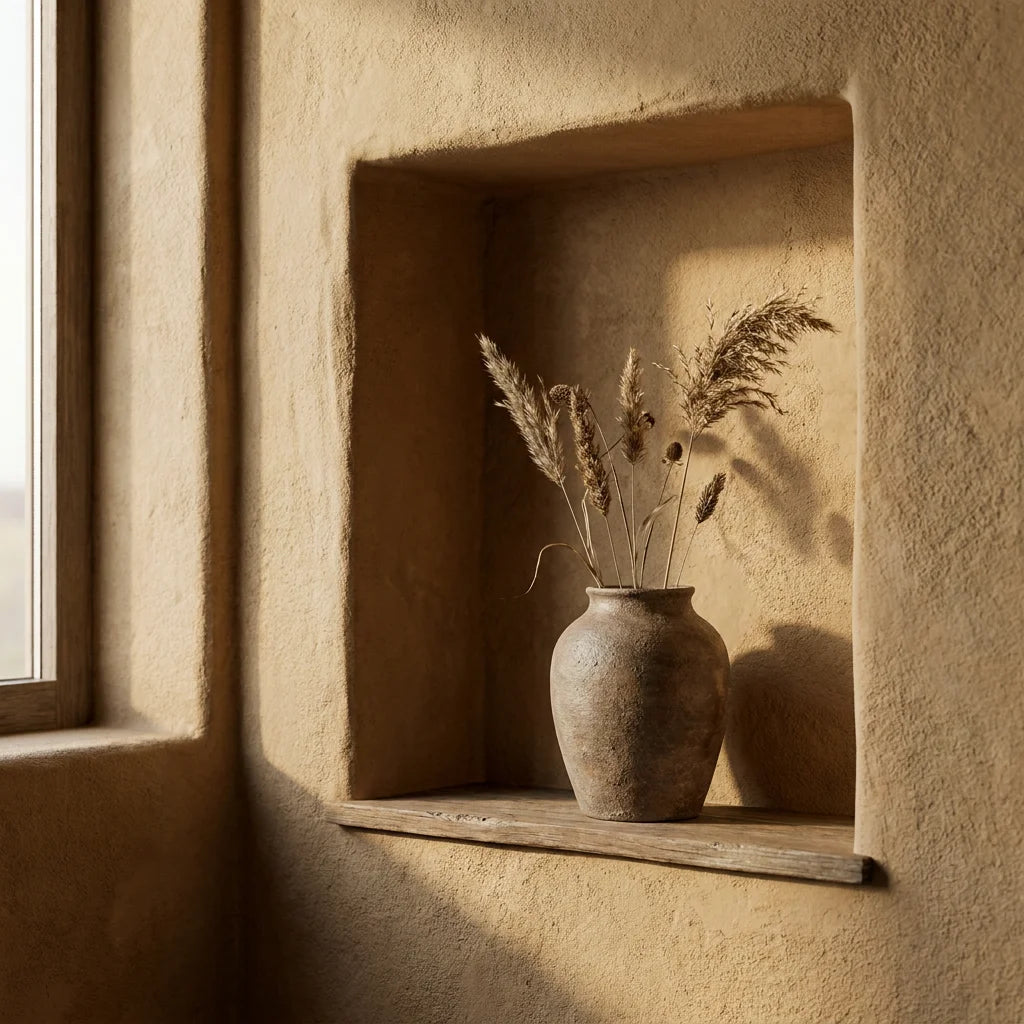
A true quiet luxury space is built upon the art of layering contrasts—the hallmark of the modern **Curated Gallery** aesthetic. At Borealforest, our stoneware is designed to behave as a sensory interface, as outlined in Solfatara Textures. But a raw clay pot or a sand-tempered cup only reveals its true visual and tactile depth when it is paired with the organic softness of natural fibers.
The union of Clay and Fiber represents a beautiful dialectic of hard and soft, cold and warm:
- Belgian Flax Linen: Un-ironed, heavy-weight Belgian flax linen tablecloths provide a beautiful, relaxed background. The irregular, visible slubs of the weave scatter natural daylight, creating a soft, low-glare visual field, as detailed in our study on the circadian alignment of Sensorial Light. Resting a hand-signed unglazed Borealforest ceramic bowl on this linen tablecloth creates a stunning, organic table setting that feels incredibly peaceful.
- Boiled Organic Wool: Heavy, dense, and naturally sound-absorbing, boiled wool blankets draped over raw cedar armchairs provide a comforting, dense envelope. Wool fibers are naturally crimped, trapping microscopic pockets of air that absorb ambient sound waves, as we explored in Silent Sanctuaries.
- Coarse Textured Hemp: Rough-hewn, coarse hemp cushion covers provide an extraordinary "frictional speed bump" for your hands, highlighting the tactile grains of wood and clay.
Section 3: Scented Fabrics and Thermal Comfort
To maximize the biological healing of our living spaces, we recommend integrating natural scent and temperature with our organic textiles:
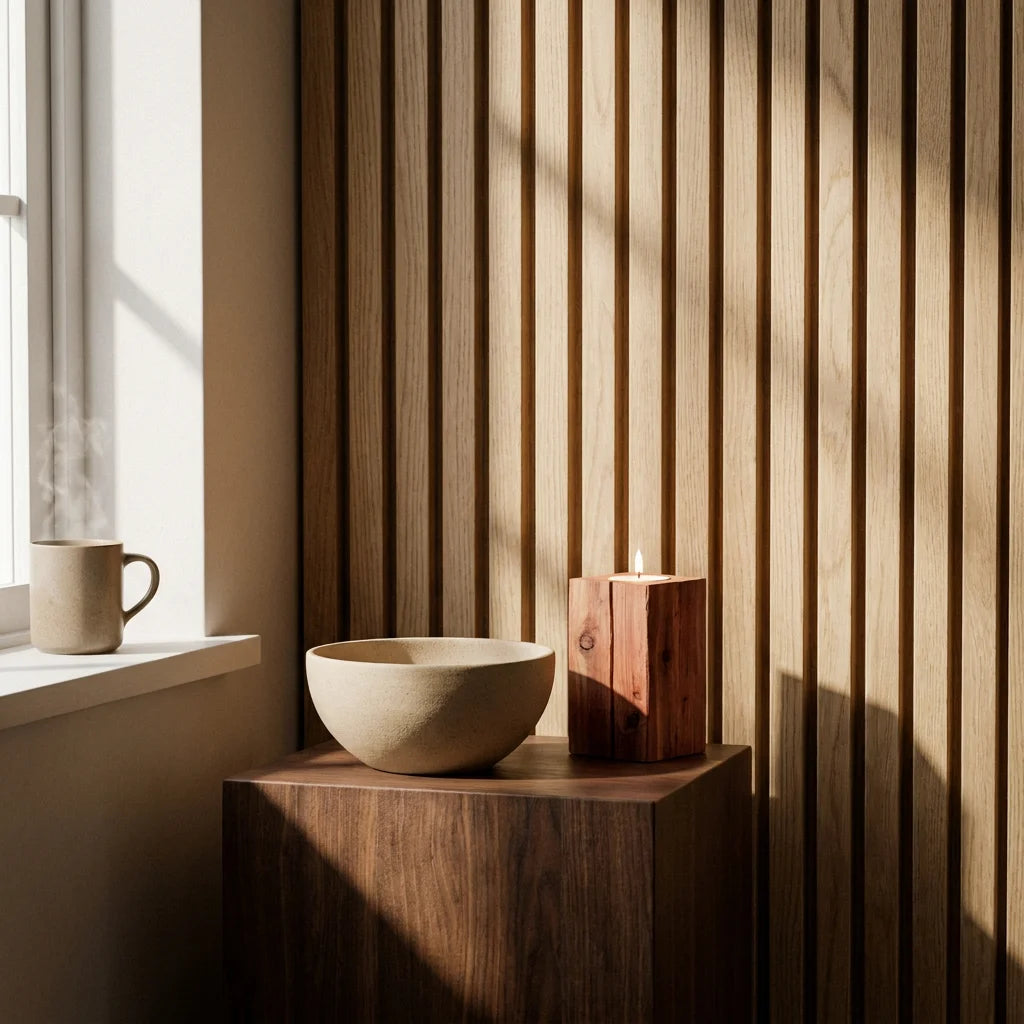
- Thermal Heart Rituals: Warm up a Borealforest soapstone platter in the oven, or light our hand-signed ceramic candle pots. The gentle, radiating warmth interacts with the raw wood of your table and the natural linen tablecloth, releasing a slow, continuous breath of cedar and pine aromas, as detailed in The Living Stone.
- The Acoustic Blanket: Boiled wool and coarse hemp cushion covers absorb sound. The muffled click of a ceramic cup against a wood tabletop, dampened by a linen runner, creates a quiet, sacred acoustic zone that lowers ambient noise, facilitating the body's transition into a rest-and-digest state.
Section 4: The Neuro-Aesthetics of Natural Fiber Spaces
The sensory impact of raw fibers and handcrafted clay is deeply rooted in the emerging science of **Neuro-Aesthetics**—the study of how our brain integrates multisensory cues to construct our perception of safety and comfort:
- Cognitive Calming: Natural flax and wool fibers possess organic, irregular fractal geometries. Processing these natural, non-machined patterns requires less visual and neural effort from our brains, allowing us to enter a relaxed, daydream-like "default mode network" (DMN) that clears cognitive fatigue.
- Cortisol Suppression: The grounding scent of red cedar, combined with the warm, velvety touch of wood grains and held stoneware on a linen cloth, sends a direct signal of environmental stability to the amygdala, reducing somatic stress.
- Tactile-Optical Integration: As we look at the warm, rich grain of wood and the deep slubs of raw linen, our brain performs a cross-sensory translation. We "feel" the cozy warmth of the fiber simply by looking at it, anchoring us fully in our physical reality, as we explored in Warm Timber.
Section 5: Curating Your Sensory Fabric Sanctuary
Integrating natural fibers and clay into your modern Zen home is about creating a curated composition of organic contrasts:
1. The Tabletop Curation: Lay a heavy, un-ironed Belgian flax linen tablecloth on a solid cedar wood console table. On it, place an unglazed Borealforest ceramic bowl containing fresh river stones. Complete the setting with a single, glowing translucent alabaster candle holder. The contrast between the rich wood grain, the soft slub of linen, the grit of raw clay, and the golden light of the stone creates a beautiful organic tension, as explored in Geological Stratum.
2. The Armchair Cocoon: Drape a heavily textured boiled wool throw blanket over a raw red-cedar armchair. On a low cedar block beside the chair, place a lit Borealforest ceramic candle pot. The combination of thermal warmth, soft light, natural cedar scent, and dense wool creates a deeply quiet, sound-damped, and cozy sanctuary corner, as explored in Modern Zen.
3. The Grounded Workspace: Replace synthetic plastic desk mats with a natural wool felt blotter. Rest your hands on the soft felt, and enjoy your coffee from a hand-signed unglazed coarse-clay mug. This simple tactile adjustment lowers somatic tension, protecting your creative focus throughout the workday.
Conclusion: Invest in Biological Sanctuary
In 2026, choosing raw, unpolished, mixed timber, natural flax fibers, and hand-signed ceramics over mass-produced plastics and chrome is a radical act of self-care. It is a decision to prioritize material truth, human artistry, and biological wellness in our daily lives.
We invite you to explore the Studio Archive of Borealforest today, find your perfect sensory fiber anchor, and bring the forest's quiet, cozy luxury home.