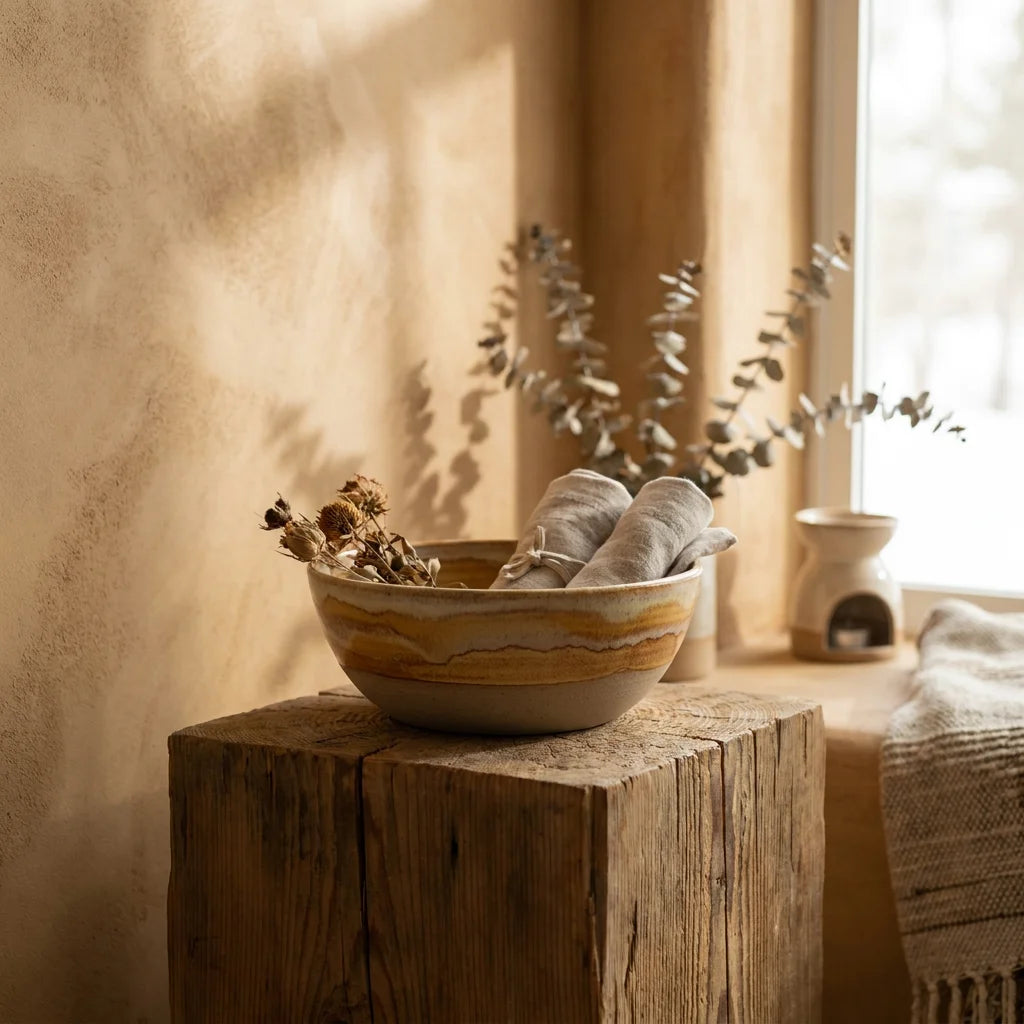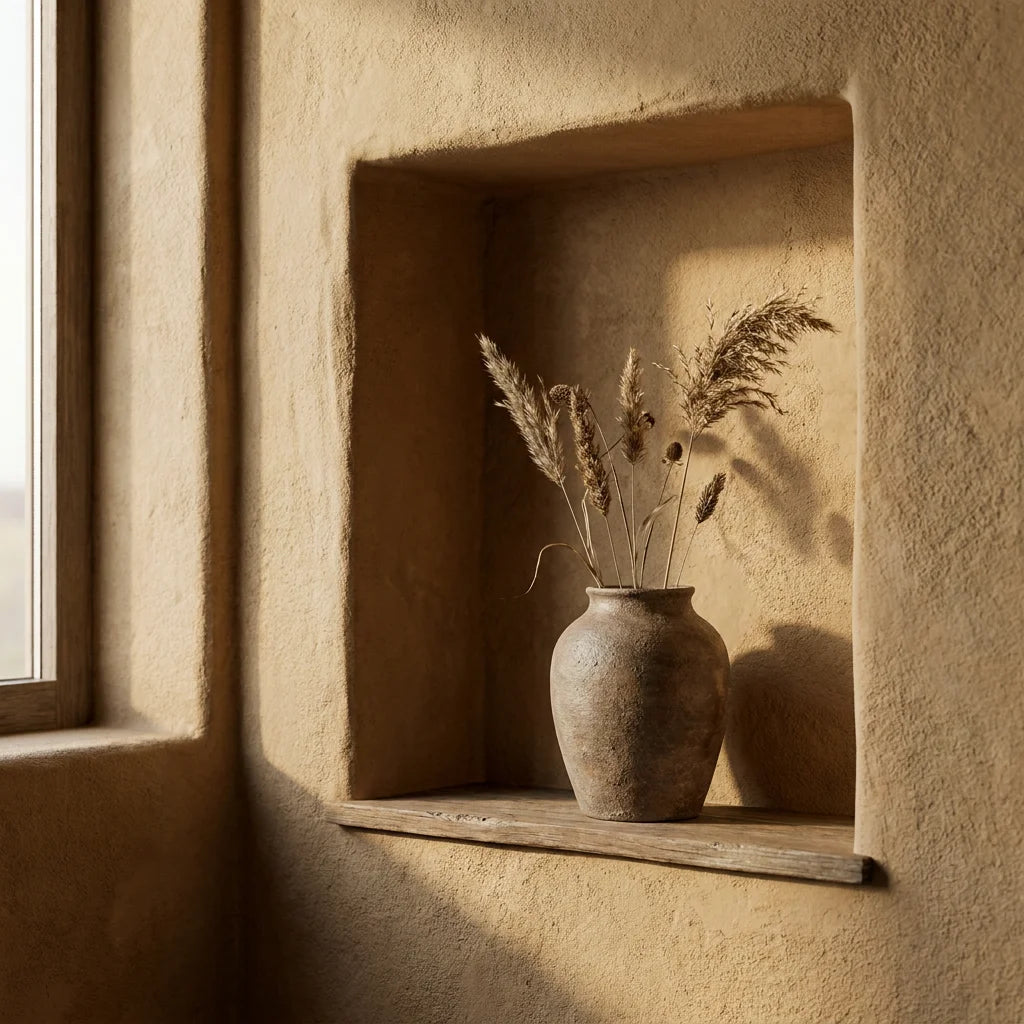

By the summer of 2026, the luxury interior design space has arrived at a profound, sculptural realization: nature is the ultimate art. In our living areas, bedrooms, and quiet study niches, we are witnessing a complete and beautiful departure from the fussy, multi-colored floral bouquets of the past. Today, the world of high-end design is defined by Botanical Sculptures. This movement elevates a single, dramatic, and twisted dry branch or a beautifully textured preserved floral—such as a raw pine limb, a dry lotus pod, or a preserved hydrangea—into a focal statement piece. In an era dominated by transient virtual content, a singular botanical sculpture, resting inside a hand-built unglazed ceramic vessel, has become the supreme symbol of artistic calm and quiet luxury.
This biological shift is a tactical embrace of natural complexity. As we have explored in our previous brand studies on the tactile comforting of Raw Earth & Clay Plaster, the horizontal sedimentation of Geological Stratum, and the fluid profiles of Modern Zen, human beings thrive when surrounded by textures that carry natural variations and the physical and visual weight of geological time. Today, we turn our attention to the medium of floral curation—and how raw, unpolished botanical elements can filter, soften, and sculpt light and shadow to create a deeply healing space.
Section 1: The Geometry of Nature—Moving Beyond Decorative Floral Clutter
For decades, traditional interior styling relied on colorful, symmetrical floral arrangements to fill space and inject artificial color. While these arrangements offered immediate visual novelty, they often felt cluttered, noisy, and transient. In response to this sensory clutter, the design world of 2026 is staging a powerful, instinctual rebellion. We are entering the age of the Single Stem Statement.
In the luxury minimalist homes of 2026, we do not seek to fill spaces with decorative noise. Instead, we select a single, highly characterful botanical specimen that behaves as a focal point. A single twisted pine branch, a dried seed pod, or a single preserved branch has its own, unique structural geometry. By isolating this single stem within an expansive, minimalist room layout, we highlight its organic lines, negative space, and imperfections. The simplicity of the surrounding space amplifies the complexity of the object. It is a visual and physical meditation on the power of growth, decay, and permanence.
Section 2: Shadow Sculpting—The Union of Clay and Light
To understand why botanical sculptures are redefining luxury, we must look at how they interact with natural light. One of the most celebrated concepts in 2026 neuro-aesthetics is **Shadow Sculpting**—the deliberate use of light and shadows to construct our perception of comfort, tranquility, and safety.
A Borealforest unglazed ceramic vessel—such as our large, coarse-textured Solfatara Textures vase—behaves as a beautiful, non-reflective optical absorber. When natural window light hits the rough, unglazed surface of the clay, it is diffused in multiple directions, breaking up harsh glare and creating soft, painterly shadow gradients, as we explored in Sensorial Light.
When a dramatic, twisted pine or olive branch is placed inside this Solfatara vase against a textured plaster or clay plaster wall, a beautiful dialogue occurs. The sharp, directional light casts a bold, graphic, and organic shadow of the branch across the wall. As the sun moves throughout the day, the shadow shifts, deepens, and stretches, turning the wall itself into a living, slow-moving canvas. The shadow becomes a secondary piece of art—a silent, calming clock that connects your indoor environment to the cosmic transit of light.
Section 3: Preserved Florals and Tactile Grounding
The sensory impact of raw, dry botanicals extends far beyond visual aesthetics; it is deeply tied to our tactile physiology. At Borealforest, our design philosophy is centered around the concept of Material Therapy—using raw geological textures and organic elements to restore our connection to the physical world, as outlined in The New Artisanal Renaissance and The Living Stone.
Dry botanicals—like a coarse, hand-gathered dry lotus pod or a preserved thistle—possess an extraordinary topological richness. They have "grit," micro-pores, and complex, non-uniform structures that can only be formed by years of slow growth and environmental weathering. When we slide our fingers across the micro-pores of a dry seed pod or hold a hand-signed unglazed clay cup, our skin processes this rich, irregular feedback. This tactile friction acts as a biological grounding anchor, pulling our awareness out of abstract digital anxieties and bringing us fully into the present moment of our daily table rituals, as explored in Sensory Fabrics.
Section 4: The Neuro-Aesthetics of Scent and Silence
The combination of dry, mineral clay and preserved botanicals creates an exceptional acoustic and olfactory environment. Micro-porous unglazed ceramics and organic plant fibers are highly efficient sound absorbers, as we detailed in our foundational study on Silent Sanctuaries. When sound waves hit these porous elements, they are absorbed through viscous friction, lowering the ambient noise floor of the room. This reduction in ambient echo calms our fight-or-flight response, allowing our autonomic nervous system to enter a relaxed, parasympathetic state.
Furthermore, unpolished woods, cedar blocks, and unglazed clays release a delicate, grounding mineral aroma when they come into contact with heat or moisture, as explored in Olfactory Sanctuaries and Terra-Cotta Healing. Scent and touch work in perfect harmony to soothe our over-stimulated minds, lowering cortisol levels and somatic tension naturally. Scent becomes a form of material therapy.
Section 5: Curating Your Botanical Sculpture Sanctuary
Integrating botanical sculptures into your modern, warm minimalist home is about creating a curated composition of contrasts—the hallmark of the modern **Curated Gallery** home:
1. The Graphic Branch Curation: Place a large, rough-textured Solfatara unglazed ceramic vase on a low, matte-black oak block. In it, place a single, dramatic, twisted dry pine branch. Set this composition against a textured warm-grey plaster wall. Position it where it can catch natural morning or afternoon side light, casting a bold, graphic shadow across the plaster.
2. The Tabletop Horizon: Lay a heavy, un-ironed Belgian flax linen tablecloth on a solid cedar or oak table. On it, place an unglazed dark iron-clay ceramic cup holding a single, beautifully textured dry lotus pod. Combine this with a small, glowing translucent alabaster candle holder. The contrast between the rich wood grain, the soft slub of linen, the grit of raw clay, the organic texture of the pod, and the golden light of the stone creates a beautiful, cozy visual depth, as explored in Warm Timber.
3. The Low-Angle Light Play: Place your curved, sculptural ceramics and dry botanicals where they can interact with natural sunlight. As the sun moves, the changing angles of light will cast long, elegant shadows across the grains of oak, cedar, and clay, transforming your room into a living, slow-moving sundial of mindfulness.
Conclusion: Invest in Permanent Wellness Value
In 2026, choosing raw, unpolished, mixed timber, natural flax fibers, dry botanicals, and hand-signed ceramics over mass-produced plastics and chrome is a radical act of self-care. It is a decision to prioritize material truth, human artistry, and biological wellness in our daily lives.
We invite you to explore the Studio Archive of Borealforest today, find your perfect botanical sculpture anchor, and bring the forest’s quiet, cozy luxury home.